Flutter continues to be one of the most in-demand frameworks for mobile application development. Companies ranging from startups to large enterprises are hiring Flutter developers to build Android, iOS, Web, and Desktop applications from a single codebase.
If you're preparing for a Flutter interview, this guide will help you understand what recruiters expect, what topics to study, and how to confidently answer technical questions.
Why Learn Flutter?
Flutter is popular because it offers:
- One codebase for multiple platforms
- Fast development with Hot Reload
- Beautiful UI using widgets
- Excellent performance
- Strong community support
- Backed by Google
- High demand in the job market
Understand Flutter Fundamentals
Before attending an interview, make sure you're comfortable with:
- Flutter architecture
- Widgets
- BuildContext
- StatelessWidget
- StatefulWidget
- Widget lifecycle
- Material Design
- Cupertino widgets
- Navigation
- Routing
- Themes
Interviewers often begin with these basics before moving to advanced topics.
Master Dart Programming
Flutter is built with Dart, so you should know:
- Variables
- Data Types
- Functions
- Classes
- Constructors
- Inheritance
- Mixins
- Abstract Classes
- Generics
- Null Safety
- Async & Await
- Futures
- Streams
- Exception Handling
Strong Dart knowledge is essential for Flutter interviews.
Learn State Management
State management is one of the most common interview topics.
Be familiar with:
- setState()
- Provider
- Riverpod
- BLoC
- Cubit
- GetX
Understand when to use each approach and be able to explain the trade-offs.
Learn Flutter Project Structure
Know the purpose of folders such as:
- lib
- assets
- android
- ios
- web
- test
- pubspec.yaml
Interviewers may ask how you organize medium or large projects.
Understand API Integration
Most Flutter jobs require working with APIs.
Practice:
- HTTP requests
- REST APIs
- JSON parsing
- Error handling
- Authentication
- File uploads
- Pagination
- Loading states
Learn Local Storage
Know how to store data using:
- SharedPreferences
- Hive
- SQLite
- Isar
Understand when each option is appropriate.
Learn Firebase
Firebase is commonly used in Flutter apps.
Important topics include:
- Authentication
- Cloud Firestore
- Firebase Storage
- Push Notifications
- Analytics
- Crashlytics
Practice Clean Architecture
Many companies use Clean Architecture because it separates concerns.
Typical layers include:
- Presentation
- Domain
- Data
You should also understand:
- Repository Pattern
- Dependency Injection
- SOLID Principles
Build Real Projects
Projects are often discussed during interviews. Build applications such as:
- Todo App
- Notes App
- Weather App
- Expense Tracker
- E-commerce App
- Food Delivery App
- Chat Application
- QR Scanner
- PDF Viewer
- Social Media App
Host your projects on GitHub and be ready to explain your design decisions.
Practice Coding
Interviewers may ask you to:
- Build a simple UI
- Fix a bug
- Consume an API
- Manage state
- Debug an issue
- Optimize performance
Practice solving small coding tasks without relying on copy-paste.
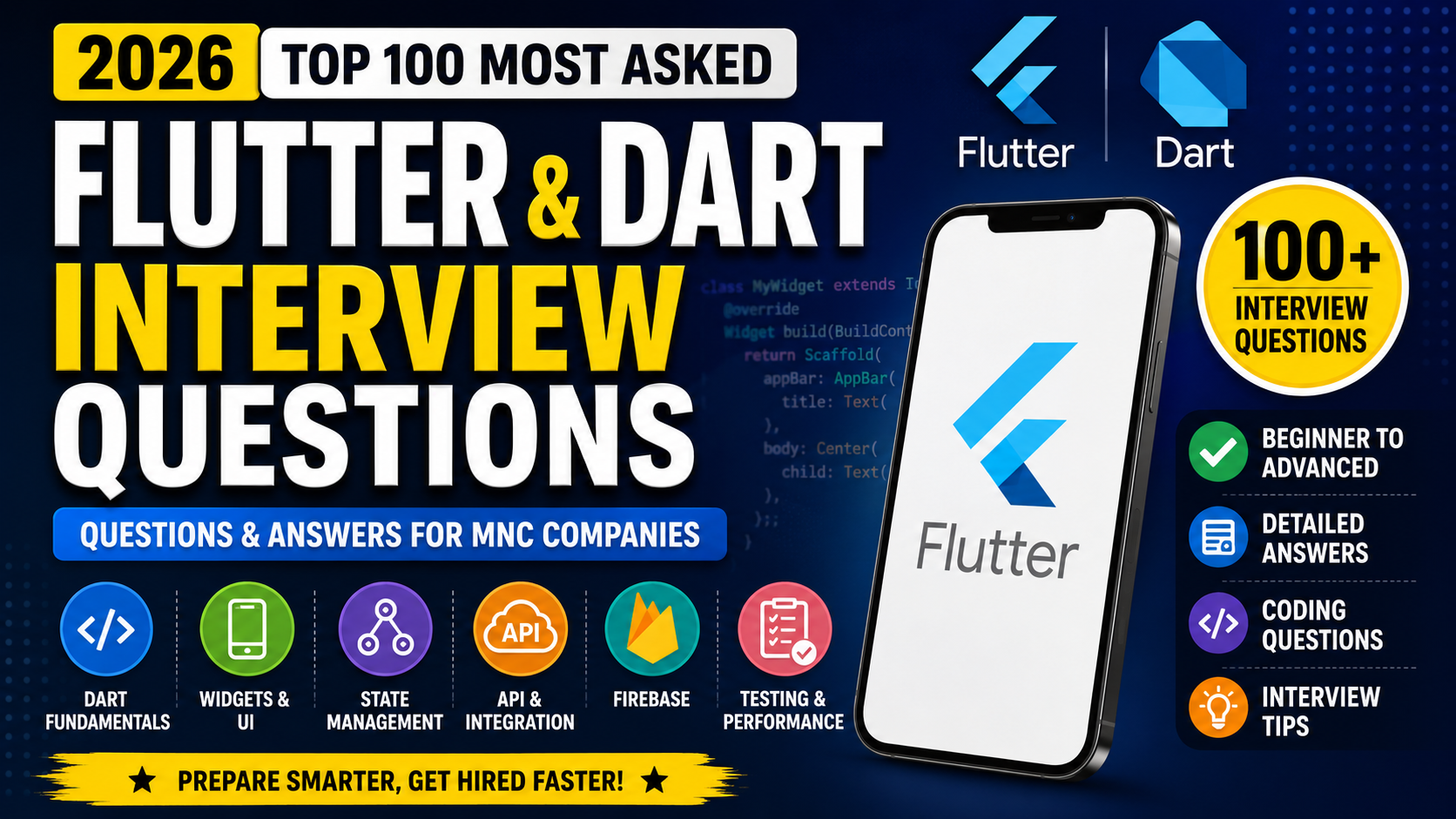
Common Flutter Interview Questions
Some frequently asked questions include:
- What is Flutter?
- What is Dart?
- Difference between StatelessWidget and StatefulWidget?
- What is BuildContext?
- What is Hot Reload?
- What is Hot Restart?
- What is a Widget?
- Explain the widget lifecycle.
- What is pubspec.yaml?
- What is Null Safety?
- What is Future?
- What is Stream?
- Explain Provider.
- Explain Riverpod.
- Explain BLoC.
- What is dependency injection?
- What is Clean Architecture?
- What are Keys in Flutter?
- How do you optimize Flutter performance?
Prepare concise explanations and, where appropriate, simple examples.
Soft Skills Matter Too
Technical knowledge is important, but employers also value:
- Clear communication
- Problem-solving
- Teamwork
- Time management
- Willingness to learn
- Positive attitude
Tips for Freshers
If you have little or no professional experience:
- Build 5–10 quality Flutter projects.
- Create a GitHub portfolio.
- Publish one or more apps on the Google Play Store if possible.
- Write technical blogs about what you learn.
- Contribute to open-source projects.
- Practice explaining your code out loud.
A strong portfolio can compensate for limited work experience.
During the Interview
Keep these tips in mind:
- Arrive on time.
- Listen carefully before answering.
- If you don't know an answer, explain how you would investigate it instead of guessing.
- Think aloud during coding questions.
- Ask thoughtful questions about the role and team.
- Be honest about your experience.
Common Mistakes to Avoid
- Memorizing answers without understanding concepts.
- Ignoring Dart fundamentals.
- Having no practical projects to discuss.
- Not testing your applications.
- Being unable to explain your own code.
- Skipping revision before the interview.
Final Preparation Checklist
Before your interview, ensure you can confidently explain:
- Flutter fundamentals
- Dart programming
- Widget lifecycle
- State management
- API integration
- Firebase
- Local storage
- Clean Architecture
- Git and GitHub
- Dependency Injection
- Performance optimization
- Your personal Flutter projects
Conclusion
Cracking a Flutter interview requires more than memorizing questions—it requires a solid understanding of Flutter and Dart, hands-on project experience, and the ability to communicate your reasoning. Build real applications, practice coding regularly, review core concepts, and be prepared to explain the choices you made in your projects. Consistent preparation will greatly improve your chances of landing a Flutter developer role in 2026.